MY WRITINGS
It is probably everyone's desire that others accept their own self-image at face value without reservation. For good reason, Luhmann's primary recommendation for successfully dealing with superiors is to reflect their self-image back to them. If the boss considers himself to be particularly eloquent, particularly innovative or particularly assertive, then you communicate with him as if he really is. Advertising works in the same way, not doubting for a second that everyone who thinks to be particularly masculine and therefore buys particularly masculine products is particularly masculine. It's a beautiful world in which you are not only accepted for who you are, but—even better—for who you like to be.
Many of today's social conflicts have to do with individuals or groups demanding their self-image to be accepted at face value by everyone else without any reservations. As human beings are predisposed to mocking criticism—especially the further apart self-image and reality are—this can ultimately only work if freedom of expression is restricted. For the time being, only the threat of punishment can prevent the absurd from being ridiculed. But can that work in the long term? I have my doubts. With every absurdity, the cost of suppression increases and the will to speak the truth becomes stronger. And having all of us—especially the powerful—anchored in reality through feedback from our environment doesn't exactly seem like a terrifying world to me either.
Mark Antony's speech in Shakespeare's “Julius Caesar” is not ironic. Irony would imply the speaker and the audience being aware of the fact that what is being said is not true. But Antony wants the audience, after Brutus has just convinced them of the justice of Caesar's murder, to believe that he thinks like Caesar's murderers. “Caesar was my friend. But Brutus is an honorable man!”—Antony has promised not to take sides against Caesar's murderers and he does not. He merely argues their position so weakly that it collapses. That, of course, is no accident.
Only Nixon could go to China. Only social democrats can dismantle the welfare state. If education is the ability to question one's own view of the world, then its equivalent in action is the ability to storm one's own palace, i.e. the temporary or permanent ignoring of what gave one one's position in the first place, be it out of conviction or tactically. This is how you stay in power.
Artificial intelligence puts our democracy at risk. This is easy to say in times when, unlike in the 1920s, there is no relevant opposition either in parliament or outside it that is openly opposed to democracy. It sounds wonderfully dramatic, but the argument behind it is quite strange: artificial intelligence would generate masses of untruthful texts, images and videos that would make it impossible to distinguish between man-made and machine-made, between true and fake. As a result, information could no longer be trusted in the future. Information from the internet.
Really? You don't know whether to envy the naivety of those who argue in this way or whether to cry in despair. Everyone knows that information from the Internet cannot be trusted, even today and since the beginning of time. Anyone who doubts this is advised to use Twitter or Facebook. Artificial intelligence simply doesn't change this at all. You still can't trust information from the internet.
Written in November 2023 | Category: Technology
Of course, one would prefer to always choose the right choice. But in a contingent world, unfortunately, that's not so easy. Even what feels right at first can later turn out to be wrong. Whether the French Revolution was right remains to be seen, it is too early to judge, replied Chinese Prime Minister Chou En-lai in 1972—almost two hundred years after the event. The right thing is difficult to identify, but many variations of the wrong thing are all the easier to recognize. Therefore it remains nevertheless: The first heuristic is that of the distinction between right and wrong. There is a solution for every problem without cheating—in everyday life there usually are even several. However, once the solution range has been narrowed down, it becomes more complicated.
The second heuristic is that of usefulness: Among everything that seems right, there are those solutions that are additionally useful, they generate advantages in other contexts apart from the specific question, where other ways cause disadvantages. Of course, the former are preferable. But also in the useful there is contingency. The solution range is thus only further reduced, the decision remains open.
The third heuristic is left: that of beauty. Possibly the sun also rotates around the earth, but the mathematical equations for a rotation of the earth around the sun are the more elegant ones. And if one is honest to oneself, the decision about beauty is most often the simplest and clearest heuristic.
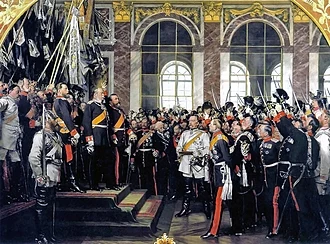 In the Franco-Prussian War of 1870 to 1871, the mobilization speed of the Germans and the French was very different at the beginning of the war. The Prussian general staff succeeded in moving powerful units to the imminent front quite quickly thanks to sophisticated rail logistics and the joint transfer of troops and material. At the same time, chaos still reigned on the French side. Units could be moved only slowly from their home bases because of inadequate logistics, and of those that reached the border, many were still waiting a long time for weapons and ammunition.
This difference in mobilization speed could have had a significant impact on the outcome of the war. It did not, however. For one simple reason: the Germans would have had to be aware of it. They weren't. To the contrary, they assumed that the French would be just as fast as they were and therefore decided to play it safe. The French, in return, assumed that the Germans were just as slow as they themselves were, so there was no reason to worry. The first advance of the war came from the French: The militarily nonsensical and, for the weaker side, risky occupation of Saarbrücken. Prussia ultimately won the war by a decisively—mobilization was not the only area in which it was superior to the French. However, if the Germans had been able to exploit their faster mobilization, victory might have been achieved even more quickly and with fewer losses.
The mistake behind this, which affected Germans and French alike in 1870, is one we encounter many times today as well: In case of doubt, one assumes that the other side with which one is in conflict is just like oneself, equipped with the same capabilities and the same knowledge. Written down in such abstract terms, it is obvious that this is quite nonsensical. That two people or two companies have exactly the same skills and knowledge, that is unrealistic. Nevertheless, it is easy to fall into this assumption: in one's own overestimation of oneself (like the French) or in overestimation of the other (like the Germans).
That's why it's worth sitting down in front of a white sheet of paper every now and then to write down what you really know for sure about your counterpart—without thinking first and foremost about yourself.
 From Camus' “Myth of Sisyphus”, I have particularly taken a control question to throw it against theoretical-abstract interpretations of the world and strategy recommondations derived from them: And if it were so, what does that turn men into? That resonated with the computer engineer in me, who knows that above a certain level of complexity, you can no longer understand software line by line, but instead have to test and evaluate its output.
Whenever I sit in management seminars or read management literature, I throw this question back at the content. With unfortunately quite unsatisfactory results at the moment: the idea of man behind current management ideology seems to be quite consistently—despite different topics and approaches—one that conceives man as exclusively good (and good-natured). One would still face obstacles to live up to this—lack of acceptance of emotions or poor reflection on humanity or bad organization—but if these obstacles were overcome, then the good and right would always win (and companies would then, of course, be even more successful).
It is a thoroughly naive view of humanity that, confronted with Büchner's question of what it is in us that goes whoring, lies, steals and murders, can only turn away and cover its ears. This is interesting because the image of the classic manager is that of a rational decision-maker who cannot avoid a realistic image of man as a precondition for his rationality. The current management literature stands in fundamental opposition to this.
We have actually come to terms quite well with the three great disappointments of mankind—that the earth is not the center of the universe (Copernicus), that man is descended from apes (Darwin) and that we are not masters of our own heads (Freud). Theoretically interesting, pointedly phrased (Freud again), but not really noticeable in everyday life.
Another disappointment, on the other hand, can be felt very well—if one does not deliberately avoid it: the study of history. For a brief, naïve moment, one may believe that the problems facing one personally, society or the entire world are unique and particularly serious. Even a shallow historical look teaches: they are not. Economic history is fairly repetitive anyway, change is currently comparatively slow and low in consequences for those affected (new websites vs. industrialization). Society was once much more divided up to the point of civil war (Weimar Republic), we are quite far away from that today. And besides the threat of extinction by a nuclear war, one may also consider climate change more manageable, especially as low side-effect solutions are known (nuclear power plants).
The fact that one's own problems seem reasonably small and solvable in historical comparison is the much greater disappointment. As if we—despite all reenactment of former struggles—do not heroically lead the most difficult battle of all times, but rather a quite minor secondary one.
Milton Friedman is one of the few intellectuals I have encountered several times in my management education and corporate trainings. I even believe, without being able to say for sure, that he is the only one so far. Unfortunately—and this is the first tragedy—each time in a distorted way.
Of course, it's always about his stance on corporate social responsibility. The tragedy begins because his core argument is missed: Friedman writes, of course, that (1) the tenuous definition of “social responsibility” makes debates impossible. And he is probably also right that (2) many companies simply place economically motivated projects under this heading, i.e. they cheat. That (3) employed managers want to look like benefactors at the expense of their owners—the classic principal agent problem—is probably also true. But Friedman's main point is a different one. “Capitalism and Freedom”, the book in which he lays out his thoughts on this, is primarily about freedom. Friedman is above all an apologist of freedom, that interactions, cooperation and business are based on the free will of the individuals involved. He sees this freedom best realized in the economic system, which is why he defends its freedom with passion.
The main problem Friedman sees with a social responsibility of corporations that goes beyond economic goals is the danger that certain approaches to social responsibility politicize the sphere of freedom, the economy. Political systems make binding decisions that everyone must abide by, whether they agree or not. The political system is necessarily not based on the free will of individuals.
One can disagree with Friedman's argument. But one thing is indisputable: that everyday life and the economy have become politicized since Friedman's time. That is the second tragedy: If postmodernism means that the different subsystems of society spill over into one another, that is, there is a juridification outside the original legal system, an economization outside the economic sphere and also a politicization of the whole of life—and I believe there is little opposition to this today—then there is really only room for Friedman as a distorted image in the discourse. He then defends a freedom in the economy in distance from politics that has long since been lost.
I don't know how many times I've heard this: We live in disruptive times. More disruptive than ever before. Typical evidence: the user growth at Facebook & TikTok. The disruptive superlative is nonsense, of course. Heuristic: Imagine presenting this thought to a person born in 1880 in Königsberg. Or to a person born in Frankfurt in 1820. Or one born in Paris in 1760. It won’t be convincing—Facebook(!) TikTok(!) user growth(!) are simply not a measure of weight in terms of disrupting ways of lives. Greetings from the literature of Klaus Kordon.
Until now, I thought the superlative was a sign of naivety, but all in all unproblematic. However, I am no longer sure about that: Because the thinking of living in special times has one disadvantage: It blocks the possibility of learning from the past and thus cuts oneself off from one of the most important sources of knowledge and innovation. With good reason, one of the most successful and innovative managers in truly disruptive times, Field Marshal Moltke (youth: Dane, cavalry charges with saber—older: Prussian, artillery engagements) in one of his greatest innovations, the Great General Staff, established as one of four departments one for war history. His later success proved him right: history is an important source for innovations.
Written in December 2020 | Category: Technology
School and university examinations have something artificial: never again in professional life will the performance evaluation be so compressed to a very concrete examination situation. There is no equivalent for exams in professional life.
The closest thing to university examinations in professional life are assessment center before hiring or a promotion. However, if the university exams are about a specific subject whose performative knowledge is being tested, assessment center are about something different: can the applicant (1) recognize and (2) fulfil the expectations placed on him. Already the first task poses a challenge: Different corporations with different officially announced cultures also have different requirements for the habitus of their new recruits. Expectations can also shift above hierarchical levels. It is the job of the applicants to know these expectations. And then it is also necessary to fill this recognized expectation spontaneously and possibly in an artificially induced stress situation through demonstrated behaviour.
Thus, the assessment center has the artificial situation in common with the university examination, but unlike the latter, skills are tested that are decisive for professional success: Being able to recognize and fulfil expectations is an essential cornerstone of a corporate career. In the subject matter of the examination, the assessment center is therefore true-to-life.
← Newer writings |
Older writings →